
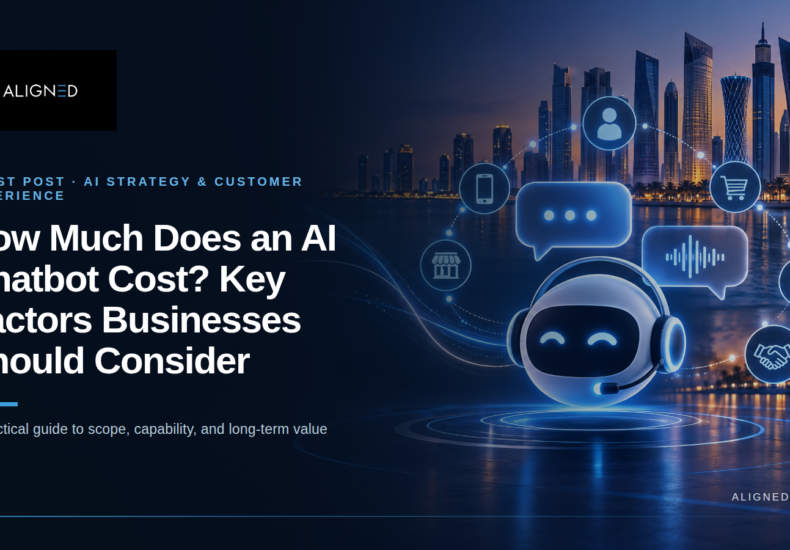
How Much Does an AI Chatbot Cost? Key Factors Businesses Should Consider?
Introduction
Businesses considering an AI chatbot often begin with a practical question: how much will it cost? There is no single price that applies to every project. A basic FAQ bot and a multilingual assistant connected to customer databases are very different solutions. The total investment depends on the chatbot’s purpose, the channels it supports, the complexity of its knowledge, the integrations required and the level of ongoing support. Understanding these factors helps organisations compare proposals on value rather than headline price alone.
Start with the business problem
The first step is to define what the chatbot should achieve. Is the goal to answer common questions, capture leads, guide customers through a process, support employees or perform actions in connected systems? A narrow use case is usually easier to scope and evaluate than a bot expected to do everything. Businesses should identify the current volume of enquiries, the tasks that consume staff time and the outcomes that would make the project worthwhile.
The type and complexity of chatbot
A rule-based chatbot follows predefined paths and is often suitable for predictable questions and simple workflows. An AI-powered chatbot can interpret more varied language and retrieve answers from approved information. More advanced assistants may use tools, APIs and business workflows to perform actions such as creating tickets or checking records. Each additional capability introduces design, testing, integration and governance work that can affect cost.
Channels and languages
A chatbot may operate on a website, messaging platform, mobile application or several channels. Each channel can have its own setup, user experience and technical requirements. Multilingual support can also increase effort, particularly when the business needs accurate Arabic dialect handling, right-to-left interfaces or carefully maintained content in multiple languages. The scope should specify which languages and channels are included rather than assuming they are interchangeable.
Integrations and data preparation
Connecting a chatbot to a CRM, booking platform, help desk, inventory system or internal knowledge base can make it more useful. However, integrations require access permissions, API work, testing and sometimes changes to existing systems. Data quality is another important factor. Outdated FAQs, inconsistent product details and scattered documents can reduce answer quality. Preparing and approving the information the chatbot will use is part of the project, not an optional afterthought.
Security, privacy and governance
Cost planning should include safeguards. Businesses may need authentication, role-based access, encryption, audit logs, data retention rules and human approval for certain actions. The appropriate controls depend on the sensitivity of the information and the relevant legal or contractual obligations. A chatbot handling general opening-hour questions has a different risk profile from one accessing customer accounts or internal records.
Development is not the only cost
A realistic budget considers discovery, conversation design, implementation, integration, testing, deployment, staff training and ongoing maintenance. After launch, businesses may pay for hosting, model or API usage, messaging fees, monitoring, support and content updates. Usage-based charges can vary with conversation volume and the services selected. Ask providers to explain recurring costs and how they may change as usage grows.
How to compare proposals
Request a clear scope that lists included channels, languages, integrations, expected usage, security measures, handover options and support arrangements. Ask how success will be measured and what happens when the chatbot cannot answer. A low initial quote may exclude important integration or maintenance work, while a higher quote may include services the business does not need. Compare proposals against the same requirements and assumptions.
Conclusion
The cost of an AI chatbot is shaped by what it needs to understand, where it operates and what it is allowed to do. Businesses can manage investment by starting with a focused use case, preparing reliable information and expanding after measuring results. For a deeper breakdown of pricing considerations, consult Aligned Tech‘s AI chatbot cost guide.
You may also like

Leave a Reply