
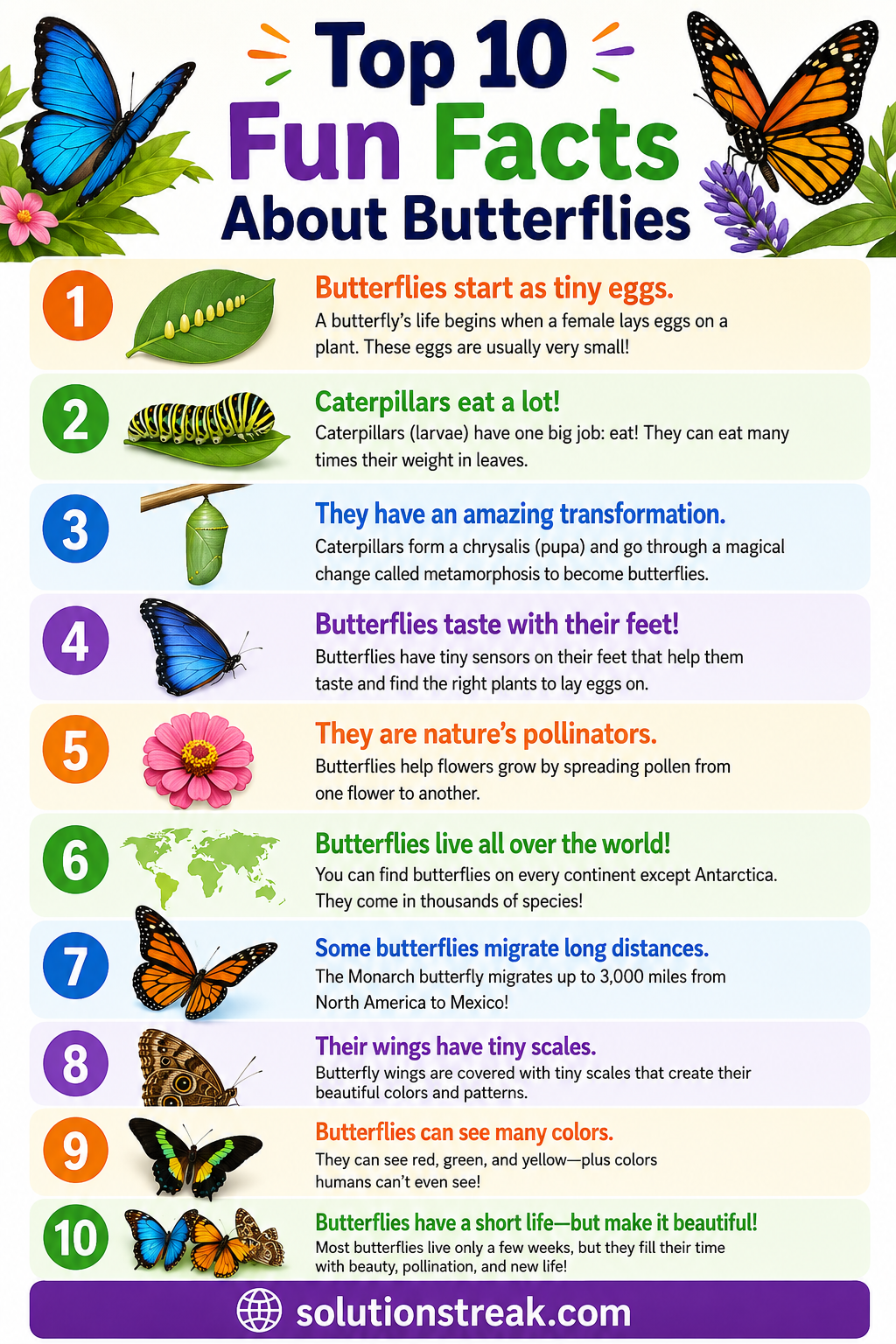
Top 10 Fun Facts About Butterflies
Butterflies are among the most gorgeous and fascinating species of the world of nature. They appear delicate, even amazing, but there’s plenty more happening beneath those vibrant wings than people think. From weird eating habits to incredible adventures butterflies can be awe-inspiring. They may appear to be straightforward but their lives are full of scientific research, intrigue and interesting facts that are sure to surprise anyone.
10 Fun Facts About Butterflies
1. Butterflies taste with their Feet
Butterflies do not use their mouths to detect food. Instead, they use taste sensors in their feet. When a butterfly land on a flower or leaf it immediately determines if this plant’s leaves are safe for eating or is a good spot to place eggs.
This is a way for butterflies to safeguard their young. When they touch an unsuitable plant detect danger and flee. Walking for them is an act of tasting.
2. Butterflies Remember Being Caterpillars
As a caterpillar develops into the body of a butterfly, it transforms completely. However, scientists have found that butterflies retain information they learned from their caterpillar days.
The result is that memories may be preserved in the cocoon. After becoming an insect, the butterfly might be able to avoid certain smells or locations it had been warned about as dangerous earlier in its life. This is quite a feat for a brain that is so small.
3. Butterfly Wings Are Actually Transparent
The wings of butterflies are attractive and vibrant, however their wings are translucent. The colors originate from the millions of scales which line the wings.
These scales reflect light various ways, resulting in colors like yellows, blues, reds and patterns. When you take off these scales from the wing beneath is unveiled. The beauty of butterflies is actually a clever simple trick.
4. Some Butterflies Travel Thousands of Kilometers
Many butterflies do not stay in the same place. Some species migrate long distances. Monarch butterflies are renowned for its thousands of kilometres during its migration.
What’s more impressive is that not a single butterfly can complete all the way. It takes many generations to complete the journey. Every generation is aware of the best places to go, without being taught.
5. Butterflies Can’t Fly If They’re Cold
Butterflies are cold-blooded insect. This means that they require warm temperatures to move. If temperatures are too cold it’s impossible for them to fly.
It’s the reason you’ll often observe butterflies lying with them open during the sunlight. They’re warming their bodies, similar to charging a battery before flying off.
6. Butterflies Don’t All Eat Nectar
Many people believe that butterflies drink nectar from flowers however, this isn’t the case. Some butterflies like the sap of trees, fruit that is rotting or even animal excrement.
Some species are attracted to tears and sweat since they require salt and minerals. That’s the reason why butterflies often appear on humans. They’re not looking for friendship, they’re searching for food.
7. The Short Life of a Butterfly Is Misleading
A lot of butterflies only live for several weeks, making them appear fragile. But certain species can live longer than what we would expect.
The butterflies that migrate, such as monarchs, are able to endure 8 or 9 months. This long lifespan helps them to finish their journey and also reproduce. While certain butterflies have short lives while others are long-lasting survivors.
8. Butterflies See More Colors Than Humans
Butterflies are able to see ultraviolet light that we can’t. This helps them identify butterflies and flowers more quickly.
Many flowers have patterns of ultraviolet which act as the landing areas for butterflies. What may appear to be a plain flower to us could be illuminated for a butterfly’s.
9. Caterpillars Eat Way More Than Butterflies
The stage of the caterpillar is focused on eating. The caterpillar is able to consume several times its body weight in one day. Its primary job is increase its size as much as it can.
Butterflies are, however consume very little. Some species do not eat all after they turn butterflies. Their entire life span is centered in reproduction and not food.
10. Butterflies Are Important Pollinators
While bees are the ones who get the most all the spotlight, butterflies aid in pollinating plants. While they travel between flowers, they carry pollen.
They are particularly important for specific wild plants. Without butterflies, numerous ecosystems could not be able to survive. Their beauty is disguised by an crucial job.
Final Thought
Butterflies look delicate and easy However, their lives are filled with unexpected events. They can remember their previous lives, cover incredible distances, can see invisibly colored colours, and taste the world with their feet. Every flutter tells a tale of surviving, changing and quiet wisdom.
When a butterfly is passing by, it’s worth stopping for a second. It’s possible that you’re looking at one of nature’s most stunning tiny marvels.
You may also like



Leave a Reply