
What is Rail Transport? Know its Advantages and Disadvantages
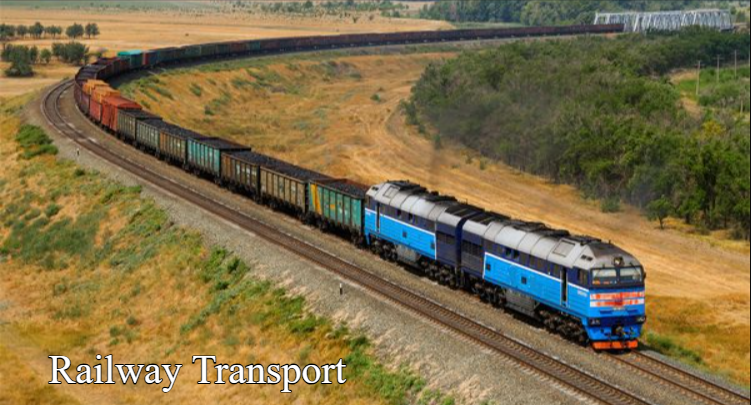
Transport is a crucial factor in the socio-economic growth of a nation. It aids in the transportation of people, goods or raw materials, from one area to another. Between the different methods of transportation, such as air, road, or water transportation, rail transport has a distinct place. Rail transportation refers to the movement of people and cargo using trains that operate on tracks fixed to railways. Since its beginning in an industrial revolution railway transport has been the mainstay of industry, trade, and public transportation.
Railways link towns, cities villages, towns, industries ports, markets, and cities. They are extensively employed for long-distance travel, and to transport bulky and heavy products. In several countries, rail transportation is regarded as a vital component for the economy. But regardless of its value and importance railway transport has some limitations. To fully appreciate its value it is important to examine both the benefits and drawbacks of rail transportation.
Advantages of Rail Transport
1. Economical for Long-Distance Transport
One of the main benefits of rail transportation is the low cost of long-distance transport and the transport of products. Transporting bulk goods or passengers for long distances with trains is more affordable than using air or road transport. This makes rail travel cost-effective for the common man and companies.
2. Suitable for Heavy and Bulky Goods
Rail transport is perfect to transport heavy and bulky products like iron ore, coal, cement, grain machinery, petroleum products. Trains can handle massive loads at the same time this is not possible with other forms of transportation.
3. Energy Efficient
Rail transportation is more efficient in energy use when compared to air and road transport. Trains use less fuel per passenger, or per ton of cargo that are transported. This conserves energy and decreases costs for transportation.
4. Reliable and Safe
Rail transportation is considered to be to be one of the most secure modes of transportation. Trains travel on fixed tracks and adhere to strictly-defined schedules as well as safety protocols that reduce the risk of accidents. Railways are less affected by weather conditions than air or road transport.
5. Environment Friendly
Rail transport is less responsible for pollution of the air than road and air transportation. Electric trains, specifically are less reliant on fossil fuels, and can help reduce carbon emissions. Railways are a more green alternative.
6. Comfortable for Long Journeys
Rail transport offers greater convenience. Train passengers can move about and sleep, eat and washroom facilities throughout the journey. This makes travel by train more efficient, particularly for longer journeys.
7. Reduces Road Congestion
Rail transport reduces road pressure by transporting huge numbers of people as well as goods. This helps reduce traffic congestion as well as road accidents and wear and tear on highways.
8. Supports Industrial and Economic Growth
Railways play an important role in the process of industrialization. Industries rely on rail transportation to transport raw materials as well as the distribution of finished products. Rail networks that are efficient encourage trade and economic growth.
9. Large Passenger Carrying Capacity
A single train can transport hundreds, or even thousands, of passengers simultaneously. This makes rail travel ideal for mass transport particularly in densely urbanized areas.
Disadvantages of Rail Transport
1. High Initial Cost
One of the main drawbacks of rail transportation is the high cost of construction. Construction of bridges, railway tracks tunnels, stations and signaling systems require a huge investments. Maintenance costs are high as well.
2. Lack of Flexibility
Rail transport is not flexible because trains operate on regular schedules and routes. As opposed to roads trains are not able to alter their route according to demands or the need for convenience. The transport of goods and passengers is only on rail tracks.
3. Not Suitable for Short Distances
Rail transportation is usually slow and unreliable. Arriving at railway stations, awaiting trains, and moving goods takes longer in comparison to the road.
4. Limited Reach
Railways can’t reach every region particularly remote villages, mountainous regions and deserts. The areas that aren’t served by railways depend on roads to connect.
5. Risk of Accidents
Although train travel usually is safe for passengers, mishaps may be a result of mistakes made by people, technology issues or natural disasters. Train accidents, although uncommon, could result in massive loss of life and property.
6. Fixed Schedule Problems
Trains run on fixed schedules. The delay caused by technical problems or weather conditions congestion may cause disruption to customers and businesses that rely on the timely delivery of their products.
7. Less Door-to-Door Service
Rail transport does not provide door-to-door service. The transport of passengers and goods requires additional transportation options like buses, trucks or taxis to get to the destination they want, which increases the amount of time and costs.
8. Maintenance and Operational Challenges
Railway tracks trains, engines, coaches and signaling systems need regular maintenance. A lack of maintenance can cause problems, delays and security risks. This increases the operational complexity.
9. Land Requirement
Railways require vast areas of land to build infrastructure and tracks. It can be difficult to acquire land and could cause displacement of individuals or legal issues, as well as environmental issues.
10. Overcrowding Issues
In several countries, trains are afflicted by congestion, particularly in peak times and during festivals. The increased capacity of trains reduces the comfort, safety, as well as the experience for passengers.
Role of Rail Transport in Modern Times
With increasing concerns over the environmental impact, fuel prices and traffic congestion, rail transportation is becoming increasingly crucial in our modern world. Metro rail, high-speed trains systems as well as electric railways are increasing speed efficiency, reliability, and the passenger experiences. The government is investing in modernization of railways to ensure it is more efficient and environmentally friendly.
Conclusion
Rail transportation is a cost-effective efficient, reliable, and energy-efficient means of transporting goods and passengers, particularly when traveling long distances. But the high cost of construction as well as the lack of flexibility and the limited reach of rail transport are major obstacles. If you plan it properly modernization, modernization, along with integration to other transportation methods, the benefits of rail transportation could be enhanced while minimizing its drawbacks.
You may also like
Leave a Reply