
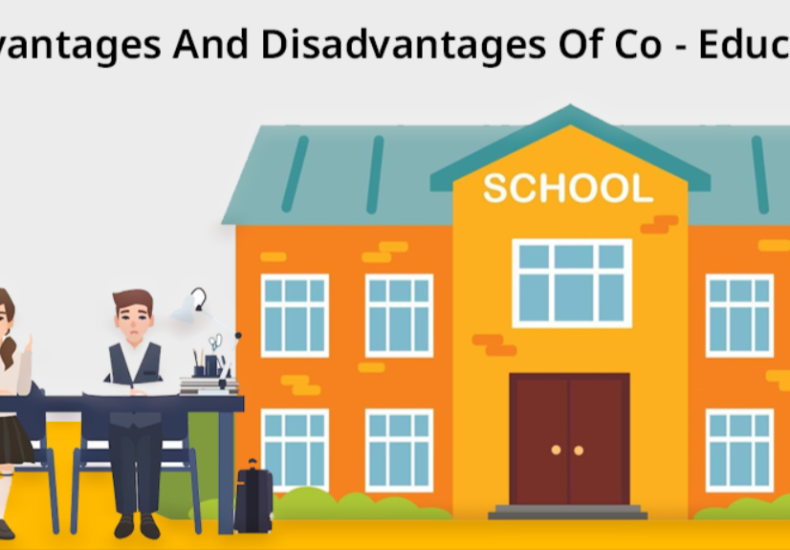
What is Co-Education? Know Its Advantages and Disadvantages
Education isn’t just about exams and books; it also affects behaviour, personality and understanding of society. One of the most important aspects of the educational system is whether girls and boys should be taught together or separate. Co-education is a method where girls and boys are enrolled in the same institution of learning. The system is popular across the world particularly at higher levels of education.
In the past the past, girls and boys were typically educated in separate schools because of traditional beliefs and traditions of society. However, as society has changed with the changing of values and the necessity to ensure gender equality co-education is becoming more widespread. The majority of those who support co-education believe it helps promote equality, mutual respect and healthy interactions between the genders. However, critics on contrary, claim that it can distract students and decrease concentration on academics. So, it’s crucial to be aware of the benefits and drawbacks of co-education.
Advantages of Co-Education
1. Promotes Gender Equality
One of the biggest benefits of co-education is that it encourages gender equality. Girls and boys study identical subjects. They adhere to similar curriculums, and receive equal chances to show their skills. This eliminates the notion that the gender of one is superior to the other.
2. Encourages Mutual Respect
Learning together can help both girls and boys to become more comfortable with each other. They develop respect for the different views, emotions and perspectives. This helps to reduce gender stereotypes and promotes an equilibrist mindset.
3. Prepares Students for Real Life
Co-education teaches students to be prepared for the real-world scenarios where women and men collaborate in workplaces and industries, as well as in the society. Students gain confidence and develop the social skills required to succeed in their personal and professional lives.
4. Healthy Competition
Co-education encourages healthy competition among students. Girls and boys encourage each other to be better academically and participate in other extracurricular activities. This competition boosts overall performance.
5. Improves Communication Skills
Interaction between girls and boys develops the communication skills of girls and boys. Students learn to communicate ideas clearly and to interact with respect. This aids in developing personality and leadership abilities.
6. Better Learning Environment
Classrooms that are co-educational often provide an engaging and healthy learning atmosphere. Different perspectives enrich discussions or debates and group activities. This improves understanding of the subject.
7. Reduces Social Shyness
Students who are in co-educational systems are more confident and less shy. They are able to communicate naturally with other genders This reduces the need for hesitation and anxiety in social settings.
8. Cost-Effective System
Co-education can be cost-effective. Instead of having separate institutions for girls and boys, resources like buildings as well as teachers, labs as well as library spaces are shared. This helps reduce overall costs for education.
9. Encourages Emotional Maturity
Interaction with people of different genders assists students in developing emotional maturity. They learn cooperation, discipline and responsible behavior which are essential life skills.
Disadvantages of Co-Education
1. Distraction from studies
One of the major drawbacks of co-education is that it can lead to distraction. Students may be more focused on social interactions or appearance instead of studying. This can impact the academic performance of students, particularly in the teenage years.
2. Lack of Concentration
In some instances students may be uneasy or self-conscious in co-educational classes. This could affect their the level of participation and concentration, especially for shy students.
3. Possibility of Indiscipline
Co-education can sometimes result in an inability to discipline if students abuse freedom. Unnecessary interaction, teasing or issues with behavior can affect the learning setting.
4. Cultural and Social Concerns
In societies that are conservative co-education might not be widely accepted. Parents might feel insecure about sending their children particularly girls, to co-educational schools because of their beliefs.
5. Emotional Stress
Teenagers can experience emotional stress because of competition or attraction. This can impact the mental health of students and their academic performance when not dealt with appropriately.
6. Unequal Participation
In certain classes, one gender can lead discussions or participate in activities. This may deter people of the opposite gender from participating in a meaningful way, which can affect the confidence of students and their learning.
7. Need for Strict Discipline
Co-educational institutions must adhere to rigorous rules of conduct and discipline in order to keep a healthy and safe atmosphere. Without adequate supervision and guidance issues can arise.
8. Pressure to Impress
Students may feel pressured to impress a different gender. This can result in unnecessary tension stress, anxiety, or a alteration in behavior, taking focus away from their education.
9. Risk of Misunderstanding
Unclarity or misinterpretation in behaviors can lead to conflict. Minor issues can turn into serious problems if they are not handled with care by administrators and teachers.
10. Not Suitable for All Age Groups
Co-education is not appropriate for all ages. Children may adjust easily however adolescents might require adequate guidance and support to manage social change.
Role of Teachers and Parents
Co-education’s success is heavily on the teachers and parents. Teachers should create a positive and disciplined atmosphere as parents teach children healthy behaviors and the values. Effective counseling and education can help to reduce the majority of problems associated with co-education.
Conclusion
Co-education promotes equality as well as confidence and social skills, preparing students prepared for life. However issues such as anxiety and distractions should not be left unaddressed. With the proper guidance discipline, understanding, and discipline co-education is beneficial to society and students.
You may also like


Leave a Reply